
Every week, someone in a business forum posts some version of the same question: “We tried marketing and it didn’t work. Should we just focus on ads?” And every week, the responses go in circles because nobody stops to ask the obvious thing — what do you actually mean by marketing?
This confusion isn’t just semantic. It’s costing businesses real money, real time, and real growth. When a founder says “marketing didn’t work,” they often mean a single campaign flopped, or a few social posts got no engagement, or they hired someone to “do their marketing” and didn’t see an immediate spike in sales. None of that is a marketing failure. Most of it isn’t even marketing in the true sense of the word.
The conflation of marketing and advertising is one of those invisible problems that quietly undermines how businesses allocate resources, set expectations, and measure results. Sorting it out isn’t academic. It’s one of the most practical things a business owner or growth-focused professional can do.
So let’s actually do it — clearly, in plain language, with real examples that map to how businesses operate today.
Contents
- 1. Two Words, One Dangerous Misunderstanding
- 2. What Marketing Actually Includes
- 3. It Reaches People Who Weren’t Looking for You
- 4. The Reason Businesses Fail at Both
- 5. A Practical Breakdown by Business Type
- 6. The Funnel as a Framework
- 7. Where Budgets Should Actually Go
- 8. The Role of Digital Channels in Blurring the Line
- 9. Why Great Advertising Needs Great Marketing to Work
- 10. What the Best Brands Do Differently
- 11. Making the Distinction Work in Your Own Business
- 12. The Bottom Line
Two Words, One Dangerous Misunderstanding
Walk into almost any small business and ask the owner to explain the difference between marketing and advertising. Most will pause, then describe them as roughly the same thing — maybe marketing is the bigger category, they’ll say, and advertising is the paid part. That’s not wrong, exactly, but it’s incomplete in a way that creates serious problems.
Here’s a more precise way to think about it:
Marketing is the strategy, system, and relationship your business builds with the market over time. Advertising is one specific tactic — paid placement — used to reach people who haven’t found you yet.
Marketing asks: who are we, who do we serve, what problem do we solve, how are we different, and how do we communicate that in a way that earns trust and drives action?
Advertising asks: how do we pay to get our message in front of a defined audience right now?
One is a philosophy and infrastructure. The other is a tool within that infrastructure.
The reason this matters: a tool without a strategy is just noise. And a strategy with no tools to amplify it stays stuck in a room full of people who already agree with you.
What Marketing Actually Includes
The asset base gets built through marketing. Every piece of content, every earned review, every SEO ranking — these are durable assets that appreciate over time. They create a warm audience that’s already familiar with you when an advertising campaign reaches them.”
Here’s what falls under the marketing umbrella:
Understanding your customer. Before any message is written, any channel is chosen, or any dollar is spent, marketing starts with research.
- Who is buying? Why?
- What words do they use to describe their problem?
- What alternatives are they considering?
- What would make them choose you over anyone else?
This is the foundation that everything else is built on — and it’s work that most businesses skip entirely.
Positioning and differentiation. Marketing decides where your brand lives in the customer’s mind relative to your competitors. Being “better” is not the goal — being meaningfully different in a way that matters to the right people is. Faster delivery, a lower price point, deeper specialization, or a premium experience that justifies a higher cost — each of these is a positioning choice. Some businesses win by serving a niche that larger competitors ignore entirely. Whatever the angle, positioning shapes your pricing, your messaging, your partnerships, and your long-term viability. That single decision ripples through everything.
Brand identity and trust. Your logo, your color palette, your tone of voice, the look of your website, the way your customer service team communicates — all of this is marketing. Brand consistency isn’t about aesthetics; it’s about building the kind of familiarity that makes people comfortable enough to buy from you. People buy from brands they recognize and trust. Marketing builds both.
Content and organic presence. Blog posts, SEO, YouTube videos, LinkedIn articles, email newsletters, podcast appearances, social media — all of this falls under marketing. These channels earn attention rather than buying it. They build authority, drive compounding organic traffic, and create assets that keep working long after they’re published. The ROI timeline is slower than advertising, but the long-term value is often higher.
Offer development. What you sell, how it’s packaged, what you include, what you guarantee, and at what price — these are marketing decisions. An irresistible offer is one of the most powerful marketing assets a business can have, and it costs nothing to create beyond clear thinking.
Lead nurturing and customer retention. Marketing doesn’t stop when someone discovers you. It governs the entire experience of becoming and remaining a customer — welcome sequences, onboarding flows, loyalty programs, upsell strategies, win-back campaigns, referral incentives. Customer lifetime value is a marketing metric.
Measurement and iteration. Marketing owns the feedback loop. Which messages resonate? Which audiences respond? What’s the cost to acquire a customer across different channels? Where are people dropping off? Marketing gathers this data, interprets it, and uses it to make better decisions over time.
The scope here is enormous — and intentionally so. Marketing is the system that makes growth possible and sustainable. Everything else is tactics within that system.
It Reaches People Who Weren’t Looking for You
Advertising is simpler to define, which is partly why people gravitate toward it. It’s paid media — money exchanged for visibility in a specific channel to a defined audience.
Search ads. Social media ads. Display advertising. Sponsored content. TV and radio commercials. Billboard rentals. Podcast sponsorships. Influencer paid partnerships. Email list rentals. All of these are advertising. They share three fundamental characteristics:
One — you pay for the placement. There is no advertising without a transaction. The moment you stop paying, the visibility ends. Unlike content you publish or SEO equity you build over time, advertising is transactional by nature. This isn’t inherently bad. It just means advertising is always a rented audience, never an owned one.
Two — it reaches people who weren’t looking for you. Unlike organic search, where someone types in a query and finds you, advertising interrupts. Someone is reading the news, scrolling Instagram, watching a video, or listening to a podcast — and your ad appears. The upside: you can reach a massive, precisely targeted audience very quickly. The downside: people weren’t looking for you, so the message has to earn their attention fast.
Three — it operates on a defined timeline. Advertising campaigns have budgets, start dates, and end dates. They generate data quickly — impressions, clicks, conversions, cost per acquisition. This speed is valuable for testing and for generating short-term results. But it also means advertising doesn’t compound the way organic marketing does. Turn off the ad, the results stop.
What advertising is not: a substitute for strategy. Advertising without a clear marketing foundation — without defined positioning, a compelling offer, a website that converts, and messaging that resonates — is the most efficient way in the world to spend money and get nothing back. The ad can be technically perfect and still fail completely because what it’s pointing people toward isn’t compelling.
The Reason Businesses Fail at Both
The most common failure pattern looks like this: a business skips the foundational marketing work, runs ads expecting them to solve everything, gets disappointing results, and concludes that either ads are a scam or their product simply isn’t marketable. Both conclusions are usually wrong.
The actual problem is sequence. Advertising is an amplifier. It takes whatever you’ve built and makes more people aware of it faster. If what you’ve built is unclear, uncompelling, or untrusted, advertising amplifies that too. More people see something that doesn’t work. More money is spent for the same zero result.
This is why understanding how marketing and advertising work together in building website traffic matters so much — particularly in digital environments where both strategies intersect constantly and the results of each are highly visible. Organic efforts and paid efforts feed each other in the digital space in ways that don’t exist in traditional media, which is what makes the strategy behind both so important.
The flip side failure is equally real. A business invests in marketing — builds great content, earns trust, develops a loyal audience — but never uses advertising to scale. They grow, but slowly. The ceiling on organic growth is real. Advertising, deployed strategically once the foundation is solid, can move a business from a steady organic growth rate to something dramatically faster.
Both failures come from treating marketing and advertising as interchangeable rather than complementary.
A Practical Breakdown by Business Type
Abstract principles are useful, but concrete examples are more useful. Here’s how the marketing vs. advertising distinction plays out across different business types.
A local service business — say, a plumbing company:
Marketing includes: building a Google Business Profile and actively generating reviews, developing a referral incentive program for existing customers, training the team to follow up after every job, optimizing the website to rank for local search terms, and positioning around a specific differentiator (24-hour response, senior discounts, a satisfaction guarantee).
Advertising includes: running Google Local Services Ads for emergency plumbing searches, a seasonal campaign on Facebook targeting homeowners within a defined radius, and sponsored placements in a neighborhood app during winter months.
The marketing work builds long-term trust and organic presence. The advertising generates calls when leads are needed quickly or when capacity allows for it.
An online software product — project management for freelancers:
Marketing includes: a content strategy targeting search queries like “how to manage client projects as a freelancer,” free tools and templates that attract the target audience, an email onboarding sequence designed to get new users to their first win, a community or Slack group that builds loyalty, and case studies that show measurable results.
Advertising includes: LinkedIn campaigns targeting freelancers and solopreneurs, retargeting ads that reach visitors who viewed the pricing page but didn’t convert, and a referral program with paid traffic to the landing page during launch.
An e-commerce brand selling skincare:
Marketing includes: an email list with a value-first lead magnet, educational content about ingredients and skin health, authentic user-generated content, a loyalty rewards program, a post-purchase experience that reduces buyer’s remorse and encourages repeat orders.
Advertising includes: Meta ads for prospecting (finding new customers who look like existing buyers), Google Shopping ads for high-intent searches, and retargeting campaigns for cart abandonment.
In each case, marketing and advertising are doing different jobs at different stages of the customer relationship. Neither works well without the other, but they’re not the same thing.
The Funnel as a Framework
If you want a visual model for how marketing and advertising divide responsibilities, the funnel is still useful — not as a rigid sequential process but as a map of customer awareness and intent.
Top of funnel — awareness: The customer doesn’t know you exist. Advertising is highly effective here because you can pay to reach people who fit your target profile before they’ve ever heard of you. Content marketing can also build awareness, but slowly. Ads are faster.
Middle of funnel — consideration: The customer knows you exist and is evaluating options. Marketing does the heaviest lifting here. Comparison guides, case studies, testimonials, FAQ content, demo videos, email nurture sequences — all of this is marketing content designed to help someone decide. Advertising can support this stage through retargeting, but the content itself is a marketing asset.
Bottom of funnel — conversion: The customer is ready to buy and just needs the right nudge. Retargeting ads (advertising) are excellent here. A compelling offer, a clear guarantee, an easy checkout process — those are marketing decisions that make the conversion possible.
Post-purchase — retention and advocacy: Almost entirely marketing territory. Customer success, loyalty programs, re-engagement campaigns, asking for referrals and reviews — this is where the long-term value of a customer is built, and it has almost nothing to do with advertising.
Understanding which stage your customer is in — and what they need from you at that stage — is a marketing skill. Using the right tool to reach them there is where advertising earns its place.
Where Budgets Should Actually Go
The way businesses allocate budget is where the marketing vs. advertising confusion causes the most concrete harm.
Here’s a common scenario: a business has a $3,000 monthly “marketing budget” and spends nearly all of it on Facebook ads. The website is outdated, the email list hasn’t been touched in months, there’s no clear brand story, and the offer on the ad landing page is nearly identical to three competitors. The ads perform poorly, the budget feels wasted, and the owner concludes that marketing is expensive and unreliable.
The diagnosis: too much advertising, almost no marketing.
A more sustainable allocation looks something like this:
Invest first in marketing infrastructure — a clear positioning statement, a website that converts, a lead capture mechanism, a basic email sequence, and some content that demonstrates expertise. This is often a one-time investment (or a periodic update) rather than an ongoing cost, and it transforms the effectiveness of everything else.
Then use advertising tactically — to drive traffic to the marketing infrastructure you’ve built, to test messages and audiences quickly, and to scale up what organic channels have already proven to work.
Track both separately. Marketing investments (content, SEO, email) build equity over time and compound. Advertising investments generate faster but shorter-lived results. Treating them as the same pool of money leads to bad decisions because they have different time horizons and different ROI profiles.
For businesses that want to grow without burning through ad budgets, building a high-converting stream of targeted visitors starts with doing the marketing work first — so that when paid traffic arrives, there’s something worth arriving to.
The Role of Digital Channels in Blurring the Line
Digital marketing has made the distinction between marketing and advertising simultaneously blurrier and more important.
On the blurry side: a Facebook post that gets boosted is both content (marketing) and a paid placement (advertising). An influencer partnership involves earned credibility (marketing) and paid placement (advertising). Native advertising is designed to look like editorial content. Sponsored search results sit alongside organic results. The channels don’t always announce which category they belong to.
On the more important side: because digital platforms give you real-time data on every tactic you use, the cost of confusion is visible almost immediately. If you boost a post and get no clicks, the data is right there. If you run ads to a landing page with a 2% conversion rate, you can see it. This transparency is an enormous gift if you know how to use it — every data point is feedback on whether your marketing is working, not just whether your ad is working.
A few specific areas where digital channels require you to understand the distinction:
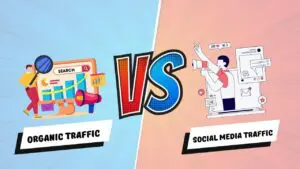
SEO vs. SEM. Search engine optimization is marketing — building content and credibility so that Google ranks you organically. Search engine marketing (pay-per-click advertising) is advertising — paying to appear in results. Both can drive traffic to the same destination, but they work differently, cost differently, and build different types of long-term value.
Email marketing vs. email advertising. Building your own email list and sending campaigns to your subscribers is marketing — it’s an owned audience that doesn’t disappear when you stop paying. Paying to have your offer sent to someone else’s list is advertising. Both have a place, but they’re not the same investment.
Social media presence vs. social ads. Building a following and publishing content on social platforms is marketing (with a very important caveat that it’s a rented platform, not truly owned). Running paid campaigns to targeted audiences on those platforms is advertising. Many businesses confuse organic social performance with advertising performance and draw the wrong conclusions from both.
For anyone serious about navigating these channels strategically, a solid web marketing checklist helps separate legitimate tactics from the enormous number of shortcuts and scams that crowd the digital marketing space — because the same confusion that makes businesses misuse their own resources also makes them vulnerable to vendors who exploit that confusion.
Why Great Advertising Needs Great Marketing to Work
This point is worth its own section because it’s the one most businesses learn the hard way.
Great advertising can get someone to click. It can get a video watched, an email opened, a landing page visited. What advertising cannot do is make a product compelling, a message believable, or an offer irresistible. Those are marketing outcomes. They have to exist before the ad ever runs.
Think about the actual sequence of what happens when someone sees a well-targeted ad:
They see the ad. The creative and copy grabs their attention — that’s advertising doing its job. They click through to a landing page. Within about three seconds, they decide whether to read further or hit the back button. That three-second decision is based entirely on what marketing has created: the brand they recognize (or don’t), the headline that speaks to their actual problem (or doesn’t), the credibility signals that make the claim believable (or don’t), and the offer that makes acting now feel worth it (or doesn’t).
If marketing hasn’t done its job, the ad click is wasted. The customer bounces. The ad cost you money and generated nothing.
This is why running ads to an unoptimized website is like pouring water into a bucket with holes in the bottom. The advertising can generate all the traffic in the world — but if the marketing infrastructure leaks, none of it converts. Fixing the bucket (marketing) makes every future dollar spent on water (advertising) dramatically more effective.
The businesses that scale successfully with advertising are almost always the ones who invested in marketing first. Deep customer knowledge is already baked in. Positioning is sharp, the message has been tested through organic channels, and landing pages have been iterated on until they actually convert. By the time advertising enters the picture, there’s already something worth amplifying. Adding paid traffic at that point isn’t a gamble — it’s adding fuel to a fire that’s already burning.
What the Best Brands Do Differently
The businesses and brands that grow most consistently over time don’t treat marketing and advertising as competing priorities. They treat them as two gears in the same engine.
Marketing builds the asset base. Every piece of content, every customer relationship, every earned review, every SEO ranking — these are durable assets that appreciate over time. They create an audience that’s already warm when an advertising campaign reaches them, and they keep generating results even during months when ad budgets are reduced.
Advertising creates acceleration. When a new product launches, when seasonal demand spikes, when a competitor enters the market, when growth goals demand more than organic alone can deliver — advertising is the mechanism for scaling quickly. It’s not a permanent state; it’s a tool deployed at specific moments for specific outcomes.
The companies that confuse the two tend toward one of two failure modes: they advertise without substance behind it (spending money to make noise about nothing compelling), or they build without amplifying (creating excellent work that never reaches the audience it deserves).
For those building growth strategies across both channels, exploring the full range of available marketing and traffic services is often how businesses discover which combination of organic and paid approaches fits their specific situation — because the right balance looks different for a local service business versus a national e-commerce brand versus a B2B SaaS product.
Making the Distinction Work in Your Own Business
If you’re reading this and recognizing some of your own business in these patterns, the path forward isn’t complicated. It just requires being honest about which layer of the problem you’re actually solving.
Start by auditing what you actually have in place. Before evaluating whether your advertising is working, ask: is your positioning clear? Does your website convert visitors? Does your messaging differentiate you from competitors in a meaningful way? Do you have a system for capturing and nurturing leads? Do your customers know how to refer you?
If the answer to most of those questions is “not really,” then fixing your advertising isn’t the priority. Building your marketing foundation is.
Once the foundation is solid — and only then — start treating advertising as an investment rather than an experiment. Every campaign needs a specific goal, a precisely defined audience, and a clear desired action. Understanding what a conversion is worth to your business also matters enormously here, because without that number, there’s no way to judge whether a cost per acquisition is acceptable or bleeding you dry.
Then measure, iterate, and scale what works. The data from advertising campaigns is some of the most useful market research available — it tells you what messages resonate, what audiences respond, what offers convert. Feed that data back into your marketing strategy. Let the two inform each other continuously.
And separate your success metrics. Don’t expect advertising to do what marketing does, and don’t expect marketing to generate the immediate demand that advertising can create. Both are valuable. Both have limitations. Using each for what it’s actually designed for is how sustainable growth actually works.
The Bottom Line
Marketing is the system. Advertising is one tool within it.
Marketing earns trust, builds relationships, creates authority, and develops the foundational assets that make a business knowable and compelling over time. It’s slow to build but powerful when it’s working, because it generates compounding results that get more effective the longer they’re in place.
Advertising reaches new people fast, tests messages quickly, and scales results when the underlying business is ready to grow. It requires ongoing investment but delivers near-immediate feedback and can generate significant volume on demand.
Neither one works as well without the other. But they need to be understood separately, budgeted separately, measured separately, and used in the right sequence and at the right moments.
The businesses that figure this out — that stop treating a Facebook ad as a substitute for a brand strategy, and stop building an email list as a substitute for a growth plan — are the ones that grow steadily, sustainably, and with a level of control that businesses relying on either alone rarely achieve.
The confusion between these two words is costing businesses growth they could have. Clearing it up costs nothing but clarity.